

Blog Details
What Is a Surety Bond? A Complete Guide for Contractors and Businesses
What Is a Surety Bond? A Complete Guide for Contractors and Businesses
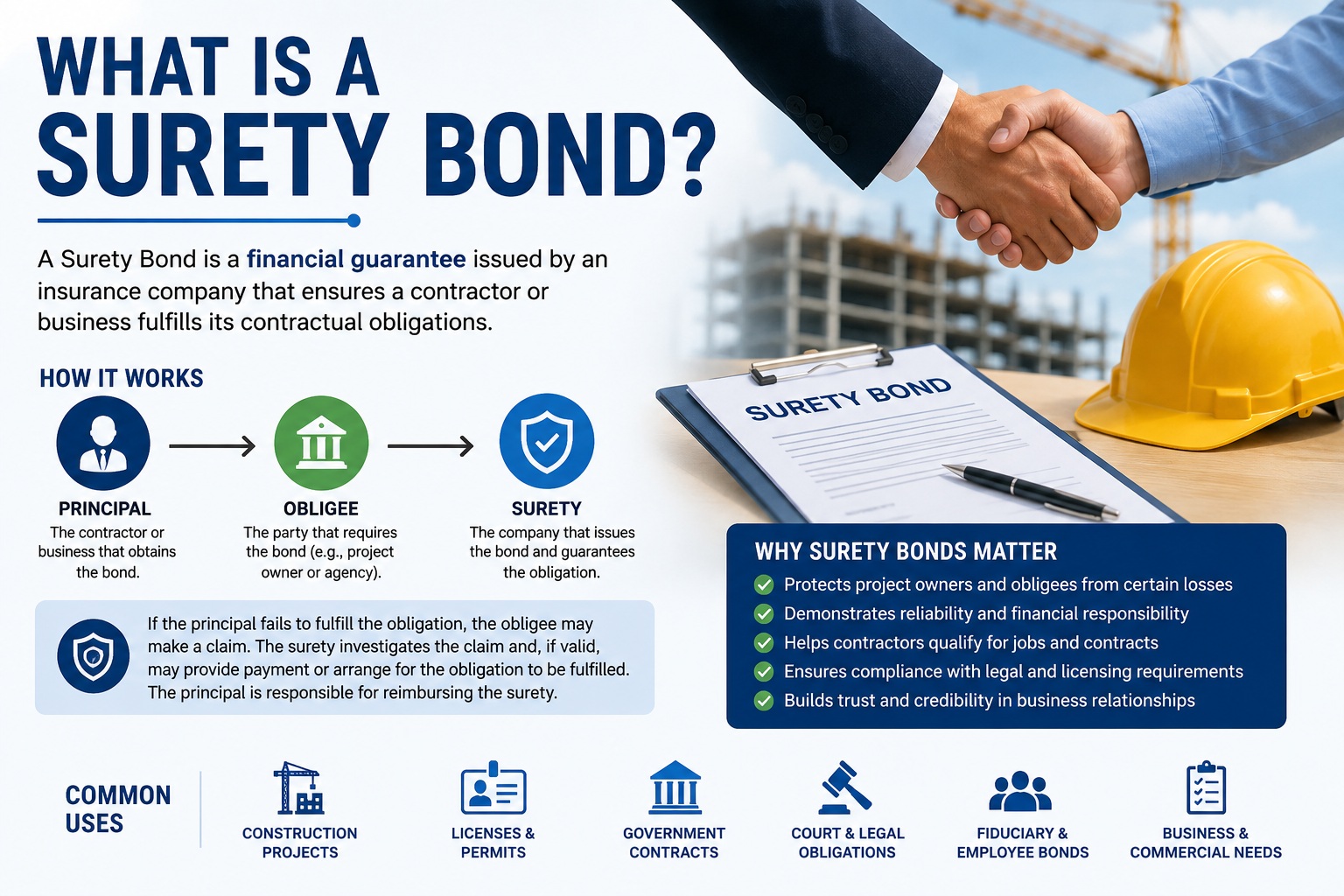
A surety bond is a financial guarantee issued by a surety company, typically an insurance company, that helps ensure a contractor or business fulfills its contractual, legal, or financial obligations.
Surety bonds are widely used in the construction, contracting, government, licensing, and commercial sectors. They provide confidence to project owners, government agencies, customers, and other parties that a business will meet the obligations it has agreed to undertake.
How Does a Surety Bond Work?
A surety bond generally involves three parties:
- Principal – The contractor or business that purchases the bond and promises to fulfill a specific obligation.
- Obligee – The party that requires the bond, such as a government agency, project owner, or customer.
- Surety – The company that issues the bond and guarantees the principal's obligations.
For example, suppose a construction company is awarded a government project. The government agency may require the contractor to obtain a surety bond before work begins.
If the contractor fails to meet the terms of the contract, the obligee may make a claim against the bond. The surety investigates the claim and, if it is valid, may arrange for the obligation to be fulfilled or provide payment up to the bond's limit. The contractor generally remains responsible for reimbursing the surety for covered losses.
Why Are Surety Bonds Important?
Surety bonds help reduce the financial and performance risks associated with contracts and business activities.
They can:
- Protect project owners and obligees from certain losses caused by non-performance.
- Demonstrate that a contractor or business has met required bonding conditions.
- Help contractors qualify for government and private-sector projects.
- Provide assurance that contractual obligations will be taken seriously.
- Support compliance with licensing and regulatory requirements.
For contractors, having the right bond can also improve credibility and demonstrate financial responsibility to potential clients.
Common Types of Surety Bonds
There are several types of surety bonds, depending on the purpose and industry.
1. Contract Bonds
Contract bonds are commonly used in the construction industry. They help protect project owners when contractors are required to meet specific contractual obligations.
Common examples include:
- Bid Bonds – Provide assurance that a bidder will honor its bid and enter into the contract if selected.
- Performance Bonds – Guarantee performance of the contract according to its terms.
- Payment Bonds – Help ensure that eligible subcontractors, laborers, and suppliers are paid.
- Maintenance Bonds – May provide protection for specified maintenance or warranty obligations after project completion.
2. Commercial Surety Bonds
Commercial bonds are generally used for business or regulatory purposes rather than a specific construction contract.
Examples include:
- License and permit bonds
- Court bonds
- Public official bonds
- Fiduciary bonds
- Certain compliance-related bonds
The exact requirements vary depending on the jurisdiction, industry, and type of obligation.
Surety Bond vs. Insurance: What Is the Difference?
Although surety bonds are commonly issued by insurance companies, a surety bond is fundamentally different from traditional insurance.
With an insurance policy, the insurer generally accepts a risk in exchange for a premium. With a surety bond, the surety guarantees the principal's obligation to the obligee, while the principal typically remains ultimately responsible for the obligation and covered losses.
In simple terms:
Insurance primarily protects the insured. A surety bond primarily protects the obligee.
This distinction is important when contractors and businesses evaluate their bonding requirements.
Who Needs a Surety Bond?
The need for a surety bond depends on the contract, industry, and applicable laws or regulations.
Surety bonds may be required for:
- General contractors
- Subcontractors
- Construction companies
- Government contractors
- Licensed professionals and businesses
- Businesses requiring specific permits or licenses
- Companies entering contracts that include bonding requirements
Before purchasing a bond, a business should determine the exact bond type, required amount, obligee, and applicable terms.
How Much Does a Surety Bond Cost?
The cost of a surety bond varies based on several factors, including:
- Bond amount
- Type of bond
- Applicant's financial strength
- Credit history
- Business experience
- Industry and project risk
- Contract requirements
- Claims history
For this reason, there is no single price that applies to every surety bond. A surety company or qualified bonding professional can assess the applicant and provide the applicable premium.
What Happens When a Surety Bond Claim Is Made?
A claim does not automatically mean that the surety will pay.
When a claim is submitted, the surety typically reviews the facts, contractual requirements, supporting documents, and the responsibilities of the parties involved. If the claim is determined to be valid under the bond's terms, the surety may take the appropriate action provided by the bond.
Because bond language and legal requirements can vary, contractors should carefully review their bond documents and seek professional advice when dealing with a disputed or significant claim.
Key Benefits of Surety Bonds
For project owners and obligees, surety bonds can provide an additional layer of protection against certain failures to perform.
For contractors and businesses, bonding can:
- Open opportunities to bid on projects.
- Help satisfy contractual requirements.
- Strengthen business credibility.
- Support licensing and regulatory compliance.
- Demonstrate financial and operational responsibility.
Final Thoughts
A surety bond is more than a financial guarantee—it is a mechanism for managing contractual and regulatory risk. By involving a principal, obligee, and surety, the bonding arrangement provides assurance that specified obligations will be fulfilled.
Whether you are a contractor preparing to bid on a construction project or a business seeking a license or permit, understanding the type and requirements of a surety bond is an important part of managing your business obligations.
SkillCouncils.Com aims to provide practical information that helps professionals and businesses better understand important financial, compliance, and industry concepts. Always review the specific requirements applicable to your contract, industry, and jurisdiction before obtaining a surety bond.

Recent Blogs



 in India Structure, Role, and Opportunities for Stakeholders.jpg)


.jpg)

.jpg)
