

Blog Details
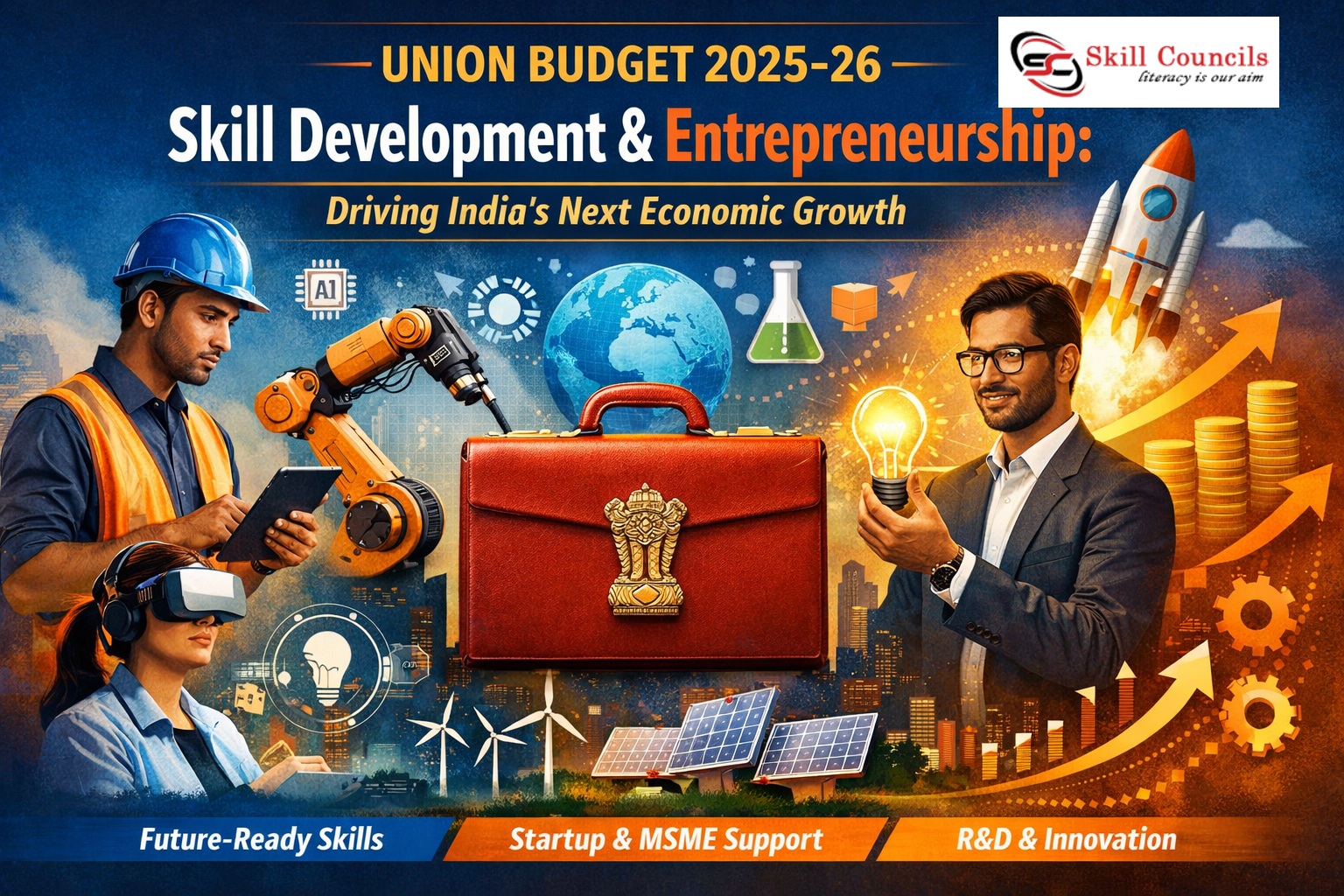
Union Budget 2025–26: Why Skill Development and Entrepreneurship Must Drive India’s Next Economic Growth
Union Budget 2025–26: Why Skill Development and Entrepreneurship Must Drive India’s Next Growth Phase
As India steadily moves toward becoming a global economic powerhouse, its greatest advantage lies in its young and dynamic workforce. With a median age of around 29 years, India is among the youngest major economies in the world. This demographic dividend presents an unprecedented opportunity—but only if the nation can successfully equip its youth with the right skills, technological capabilities, and entrepreneurial support systems.
The upcoming Union Budget 2025–26 presents a crucial opportunity to accelerate India’s growth story by prioritizing two powerful pillars: Skill Development and Entrepreneurship. According to Dr. Yajulu Medury, strengthening these pillars will play a decisive role in shaping India’s economic trajectory over the coming decade.
India’s policy direction must focus on preparing the workforce for future industries while simultaneously enabling entrepreneurs to transform innovation into economic growth.
India’s Demographic Advantage: A Window of Opportunity
India is home to over 65% of its population below the age of 35, making it one of the largest reservoirs of human capital in the world. However, the demographic dividend can quickly turn into a challenge if young people do not receive industry-relevant training and employment opportunities.
Government initiatives such as National Skill Development Corporation, Pradhan Mantri Kaushal Vikas Yojana, and Skill India Mission have already laid the groundwork for expanding vocational education and skill training across the country.
Yet, the rapidly evolving nature of global industries demands that the next phase of policy reforms focus on future-ready skills, innovation ecosystems, and global competitiveness.
The Union Budget 2025–26 can play a transformative role in strengthening this ecosystem.
Building a Future-Ready Workforce
The world of work is undergoing massive transformation. Technologies such as Artificial Intelligence, robotics, automation, green energy, and digital infrastructure are reshaping industries and creating entirely new job roles.
For India to remain competitive in this evolving landscape, its skill development ecosystem must evolve accordingly.
1. Integrating Emerging Technologies into Skill Training
Training programs must move beyond traditional trades and include future-focused domains such as:
- Artificial Intelligence and Machine Learning
- Blockchain and Web3 technologies
- Robotics and industrial automation
- Cybersecurity and digital infrastructure
- Renewable energy and sustainability technologies
Integrating these technologies into vocational training programs will ensure that India’s workforce is aligned with global industry demand.
2. Global Benchmarking of Vocational Education
India’s skill ecosystem must align with international standards to enable workers to compete globally. Countries such as Germany, Singapore, and South Korea have demonstrated how strong vocational education frameworks can transform industrial productivity.
Strengthening partnerships between industry, academia, and skill training providers can help:
- Align curricula with industry needs
- Enable international certifications
- Facilitate cross-border workforce mobility
These measures will enhance the global employability of Indian youth and position India as a global hub for skilled talent.
3. Boosting Research and Innovation
Another critical requirement is strengthening the country’s research and development ecosystem.
India currently spends significantly less on R&D compared to developed economies. Increasing investments in research can help India transition from being a consumer of technology to a creator of technology.
The government’s initiative through the National Research Foundation aims to promote research collaboration between academia, industry, and government institutions. Operationalizing this framework effectively will be crucial for nurturing innovation-led growth.
Empowering Entrepreneurs: The Engine of Economic Growth
Alongside skills, entrepreneurship plays a vital role in transforming ideas into scalable businesses. Over the past decade, India has emerged as one of the world’s largest start-up ecosystems.
Initiatives like Startup India and the expansion of digital infrastructure have significantly improved the entrepreneurial environment.
However, several challenges continue to restrict the growth potential of Indian start-ups.
Key Challenges for India’s Start-Up Ecosystem
Despite rapid growth, entrepreneurs still face structural barriers such as:
- Slow patent approvals, particularly in deep-tech sectors
- Limited access to early-stage funding for innovation-driven startups
- Regulatory complexity and compliance burdens
- Technology adoption gaps among MSMEs
Addressing these challenges through policy interventions in the upcoming budget can unlock massive economic value.
Policy Measures Needed in Budget 2025–26
1. Operationalising the National Research Foundation
Strengthening the National Research Foundation will help bridge the gap between research institutions and industry. This can accelerate the commercialization of innovative technologies developed in universities and research labs.
2. Streamlining Patent Processes
Patent approvals in India often take several years, slowing down innovation and discouraging investors.
Simplifying intellectual property processes and expanding digital patent examination infrastructure could significantly improve ease of innovation and research commercialization.
3. Tax Incentives and Support for Start-ups
Offering targeted tax incentives for deep-tech startups, research-driven enterprises, and high-tech manufacturing ventures could attract more investment into emerging sectors.
Such measures will also strengthen India’s ambition to become a global innovation hub.
4. Strengthening MSMEs Through Digitisation
Micro, Small, and Medium Enterprises (MSMEs) contribute significantly to employment and GDP. However, many MSMEs still struggle with access to finance and digital tools.
Policy reforms should focus on:
- Expanding credit access through digital lending platforms
- Supporting digital transformation of MSMEs
- Encouraging adoption of Industry 4.0 technologies
Strengthening the MSME ecosystem will ensure that innovation and entrepreneurship expand beyond metropolitan cities and reach rural and semi-urban regions.
The Road to a Self-Reliant and Innovative India
A skilled workforce and a thriving entrepreneurial ecosystem create a virtuous cycle of economic growth.
When individuals gain the right skills, they become employable or capable of starting businesses. When entrepreneurs innovate, they create jobs and stimulate new industries.
This interconnected growth drives:
- Employment generation
- Technology innovation
- Economic resilience
- Reduction in regional disparities
In the long run, investing in skills and entrepreneurship will help India transition from a labour-driven economy to a knowledge-driven innovation powerhouse.
Budget 2025–26: Investing in People, Not Just Numbers
As India stands at a pivotal moment in its development journey, the Union Budget 2025–26 must go beyond fiscal numbers and focus on human capital development.
By strengthening skill development frameworks, supporting research and innovation, and empowering entrepreneurs, India can unlock the full potential of its demographic advantage.
The real success of the budget will be measured not only in economic growth figures but in how effectively it empowers India’s youth to shape the nation’s future.
💬 What policy reforms do you believe should be prioritised in Budget 2025–26 to strengthen India’s skill and entrepreneurship ecosystem? Share your thoughts and join the conversation.

Recent Blogs



 in India Structure, Role, and Opportunities for Stakeholders.jpg)

.jpg)

.jpg)
